Screen Time and ADHD — Why Your Phone Feels Impossible to Put Down
Everyone struggles with their phone. But if you have ADHD, it's a different kind of struggle.
You don't just lose 20 minutes to scrolling — you lose 3 hours and genuinely don't know where the time went. You set your phone down intending to work, and 10 seconds later it's back in your hand. You're not lazy. Your brain is wired differently, and your phone is perfectly designed to exploit that wiring.
Why ADHD makes screen addiction worse
ADHD brains have lower baseline dopamine levels. That's the core of it. Your brain is constantly seeking stimulation to get to a level that neurotypical brains maintain effortlessly.
Your phone is the most efficient dopamine delivery device ever created. Every scroll, every notification, every new piece of content gives your brain exactly what it's craving. And unlike a book or a conversation, your phone never stops delivering.
Here's what makes ADHD + phones especially difficult:
Hyperfocus traps. ADHD doesn't mean you can't focus — it means you can't choose what to focus on. When your brain locks onto a scroll session, breaking free feels almost physically impossible. That's hyperfocus working against you.
Time blindness. Most people feel time passing. With ADHD, you don't. "I'll just check for a minute" genuinely feels like a minute — even when it's been an hour. Your internal clock doesn't send the warning signals.
Dopamine seeking. The variable reward pattern of social media (some posts are great, most aren't) is the perfect dopamine slot machine. ADHD brains are specifically more vulnerable to this pattern because they're already dopamine-deficient.
Task initiation problems. Starting a boring task is the hardest part of ADHD. Your phone offers an instant escape from that discomfort. Why start the hard thing when relief is one tap away?
What doesn't work
Let's be honest about what fails for ADHD brains:
- "Just put your phone down" — If you could, you would have already
- Willpower-based approaches — ADHD is literally an executive function disorder. Willpower is the thing that doesn't work.
- Screen Time app limits — You'll override them every time. The "Ignore Limit" button is the easiest button you'll ever press.
- Guilt and shame — Makes it worse, not better. You scroll more when you feel bad.
The only thing that works is changing the environment so the default behavior changes.
What actually helps
1. Make your phone boring by default
Strip away everything that makes your phone a dopamine machine. Remove colorful app icons, social media shortcuts, and visual clutter.
Minimalist Launcher replaces your entire home screen with a clean, text-based list of just your essential apps. For ADHD brains, this is a game-changer — no visual triggers means your brain doesn't get pulled into an impulse scroll.
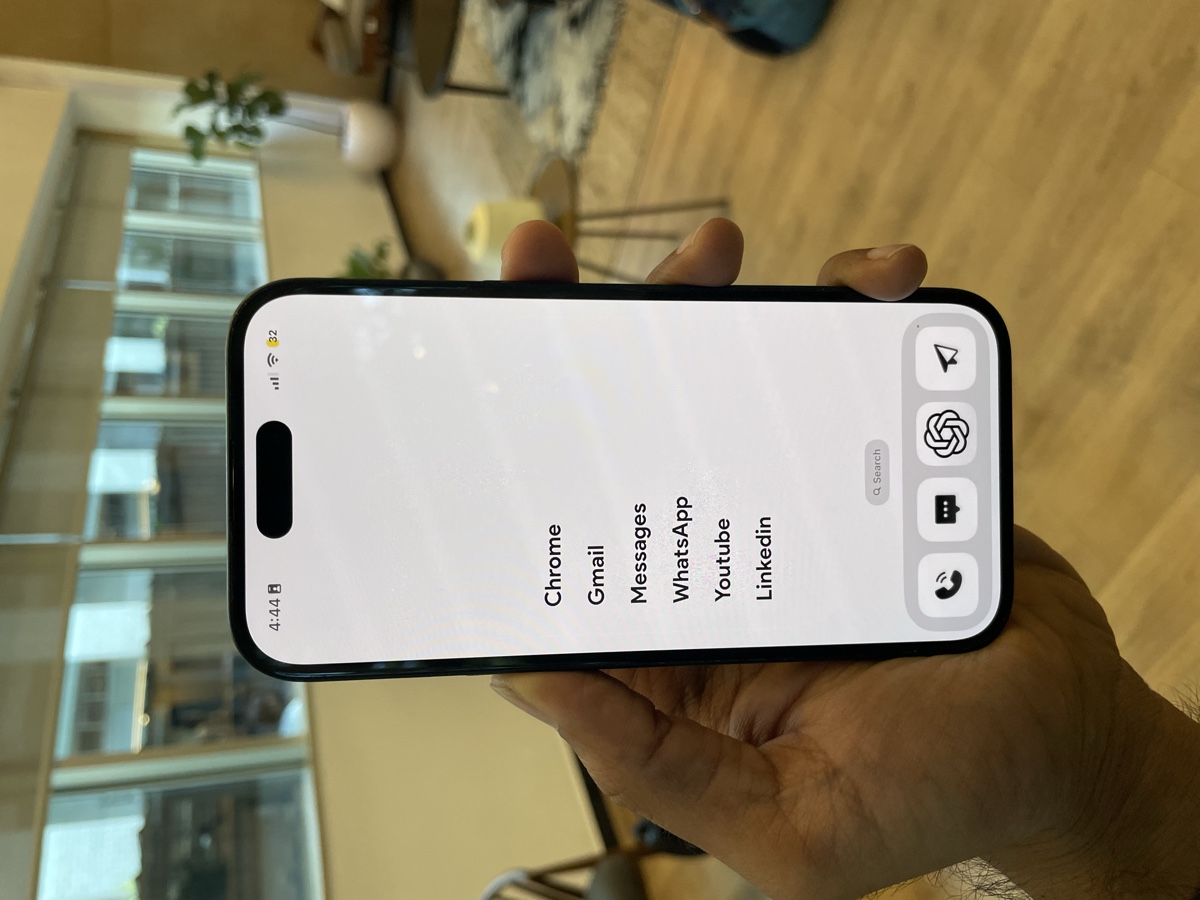
2. Use physical barriers, not mental ones
ADHD brains respond to environmental changes, not rules. Make it physically harder to doomscroll:
- Phone in another room while you work
- App blocking by schedule — Minimalist Launcher's Digital Detox can lock apps during your work hours automatically
- Log out of everything — the friction of a password kills impulse opens
- Grayscale mode — a colorless phone is dramatically less appealing
3. Work with hyperfocus, not against it
If your brain is going to hyperfocus on something, make it something useful. Before you pick up your phone, open the app you want to use (calendar, notes, a learning app). Give your brain the stimulation it craves, but in a direction you choose.
4. Use body doubling for phone-free time
Body doubling — working alongside another person — is one of the most effective ADHD productivity strategies. It also works for phone-free time. Tell someone: "I'm not using my phone for the next hour." Their presence creates just enough accountability to break through the impulse.
5. Forgive yourself constantly
This is the most important one. You will pick up your phone. You will lose an hour. It will happen again.
That doesn't mean you failed. ADHD is a neurological condition, not a motivation problem. Every time you catch yourself and put the phone down, that's a win — even if it took 45 minutes to notice.
Progress isn't linear. It's messy, inconsistent, and full of setbacks. That's ADHD. That's okay.
You're not broken — the system is
Social media is designed to be addictive for everyone. For ADHD brains, it's designed to be inescapable. Recognizing that is the first step.
You don't need more willpower. You need a phone that works with your brain instead of against it. Start with one change — make your home screen boring — and build from there.