What is Popcorn Brain? How Screens Are Rewiring Your Focus
You sit down to read a book. Three paragraphs in, you reach for your phone. There's no notification — you just felt the pull. You scroll for 2 minutes, put it down, and try to read again. You re-read the same paragraph. Your brain won't settle.
That's popcorn brain.
What popcorn brain actually means
The term was coined by researcher David Levy to describe a brain so accustomed to the constant stimulation of screens that real life feels too slow. Like kernels popping in rapid succession — your attention bounces from stimulus to stimulus, never resting on one thing.
It's not a medical diagnosis. It's a pattern. And if you've ever felt like your attention span is shrinking, you're not imagining it.
What's happening in your brain: Every time you scroll, tap, or swipe, your brain gets a tiny hit of dopamine. Not because the content is good — but because it might be. This variable reward pattern trains your brain to crave constant input. Over time, your baseline for stimulation rises. A book, a conversation, a quiet meal — they can't compete with the infinite novelty of a feed.
Signs you might have popcorn brain
- You can't watch a movie without checking your phone
- You read the same paragraph multiple times because your mind drifts
- Silence feels uncomfortable — you need background noise or a screen
- You pick up your phone with no purpose, just a reflex
- Waiting in line for 30 seconds feels unbearable without something to look at
- You start tasks but switch to something else before finishing
If 3 or more of these sound familiar, your brain has adapted to expect constant stimulation.
Why it's getting worse
Social media apps are specifically designed to create popcorn brain. Infinite scroll, autoplay, push notifications, algorithmic feeds — every feature exists to keep your attention popping from one thing to the next.
The average person now checks their phone 96 times per day. Each check trains the habit deeper. And the younger you started, the more wired-in the pattern is — which is why Gen Z reports the worst attention span issues.
How to fix it
The good news: popcorn brain isn't permanent. Your brain is plastic — it adapted to constant stimulation, and it can adapt back. But it takes intentional effort.
1. Reduce the input
Your brain can't calm down if it's still being bombarded. Start by making your phone less stimulating:
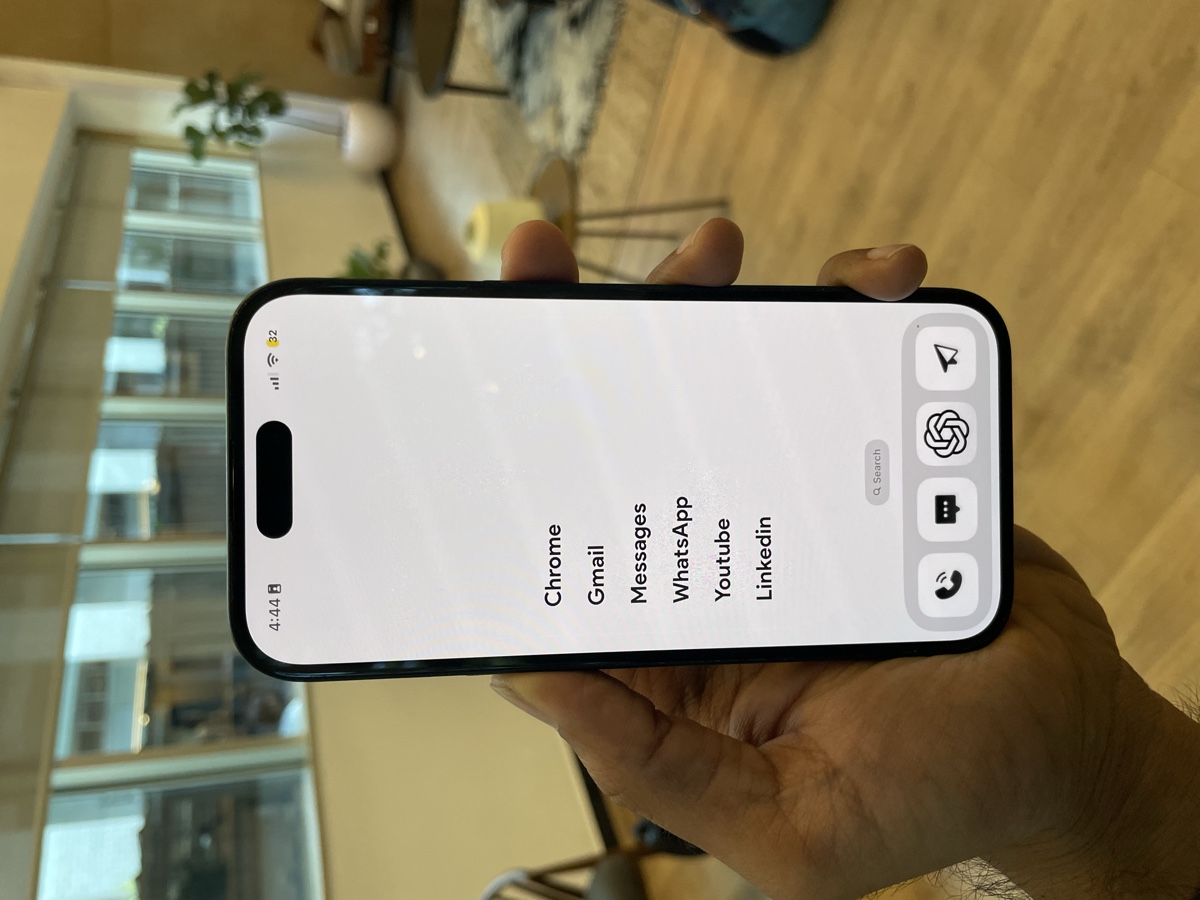
- Remove social media from your home screen
- Turn off all non-essential notifications
- Use Minimalist Launcher to replace your cluttered home screen with a clean, text-based layout. When there's nothing tempting to tap, your brain stops expecting constant stimulation.
2. Practice single-tasking
Pick one activity. Do only that. No phone nearby, no second screen, no background YouTube.
Start with just 10 minutes. Read 10 minutes without checking your phone. Cook a meal without a podcast. Walk without earbuds. It will feel uncomfortable at first — that discomfort is your brain recalibrating.
3. Schedule boredom
This sounds strange, but boredom is medicine for popcorn brain. Your brain needs unstimulated time to reset its baseline.
- Wait in line without your phone
- Sit with your morning coffee and just... sit
- Commute without scrolling
The urge to fill every gap with content is the problem. Resisting it is the fix.
4. Block apps after a usage limit
If you can't stop cold turkey, set boundaries. Minimalist Launcher's Digital Detox lets you block distracting apps after a set usage limit — say, 5 minutes of Instagram per day. You still get your fix, but your brain doesn't get the endless loop.
5. Give it two weeks
Research suggests it takes about 14 days of reduced screen stimulation for your brain to start recalibrating. The first few days are the hardest — your brain will crave the input. By week two, you'll notice you can focus longer, enjoy conversations more, and actually finish a chapter of a book.
The bottom line
Popcorn brain is your brain's response to an environment designed to scatter your attention. It's not a character flaw — it's an adaptation. Change the environment, and your brain will follow.
The first step is the simplest: make your phone boring. The rest takes care of itself.